


From 8 to 12 September 2025, the Institute for Nuclear Science and Technology (INST) under the Vietnam Atomic Energy Institute (VINATOM), in cooperation with the International Atomic Energy Agency (IAEA), organized the Regional Workshop on Nuclear and Isotope Techniques for the Management of Plastic Pollution in the Marine Environment Following the Sampling Campaigns in Hanoi within the framework of the IAEA technical cooperation project RAS7038, “Monitoring the Marine Environment for Enhanced Understanding of the Abundance and Impact of Marine Plastic Pollution”.
The workshop was honored to welcome Mr Carlos Manuel Alonso Hernandez – IAEA representative and Technical Officer of the project RAS7038; Mr Giuseppe Suaria – IAEA international expert; Ms Tran Bich Ngoc – Deputy Director General of the Vietnam Agency for Radiation and Nuclear Safety, and National Liaison Officer (NLO) of Vietnam to the IAEA; Mr Phan Viet Cuong – Vice President of VINATOM; Mr Nguyen Huu Quyet – Deputy Director in charge of the INST; along with 14 representatives from 13 Member States and staff from the INST.
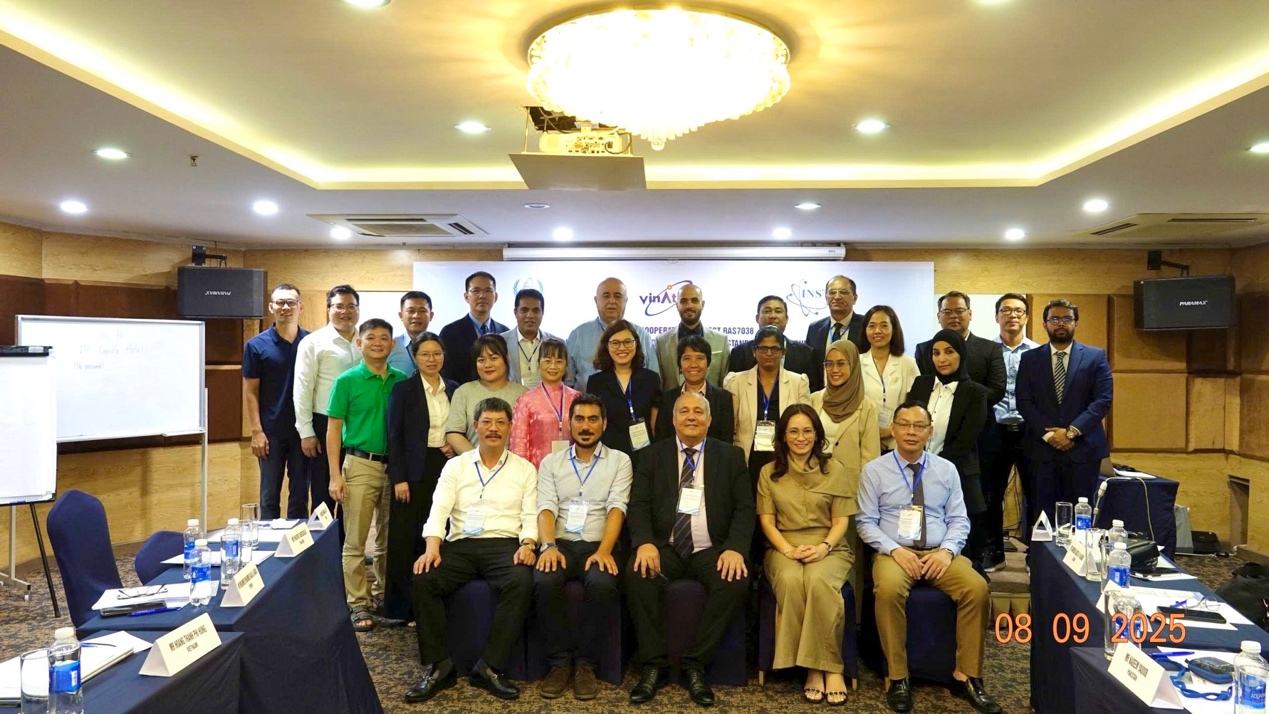 The workshop participants at the opening ceremony
During the workshop, the participants provided updates and shared experiences in the implementation of microplastics monitoring methodology, discussed necessary improvements to the monitoring program, developed the regional report based on the collected data, uploaded their respective national data to the NUTEC Plastics database, and visited the INST’s laboratories.
The key outcomes were presented during the workshop as follows:
– Sampling data scope: Sampling location data were received from 77 different locations across 11 countries, including 33 beach and 40 manta net sampling locations.
– Surface water microplastics data (0.3–5 mm): Data were reported from 25 different sampling locations across 7 countries, with microplastic (MP) concentrations ranging from 0.017 to 8811 MP/m³. The average MP abundance across the dataset was 462.3 MP/m³. Regarding polymer composition of MPs extracted from seawater samples, overall, polypropylene – PP (37%) and polyethylene – PE (35%) were the two most abundant polymers across the entire dataset.
– Beach sand microplastics data (0.3–5 mm): Data were reported by 9 countries that collected 39 sand samples from 20 different locations. Reported MP concentrations in beach sand ranged from 1.067 to 2944 MP/m2. The average MP abundance in beach sand across the dataset was 377.25 MP/m2. Regarding polymer composition of MPs extracted from beach sand samples, overall, PP (64%) and PE (27%) were the two most abundant polymers across the entire dataset.
Following the data reports, Mr Giuseppe Suaria provided hands-on guidance on data entry and generated a map showing the sampling locations, facilitating the observation of microplastics distribution in the sites.
The key gaps and challenges encountered by the participating countries with regard to microplastics monitoring were identified: standardization of sampling, preservation, and cleaning procedures; harmonization of polymer identification and spectral libraries; confusion in color classification of microplastics; and capacity building for laboratories in resource-limited countries.
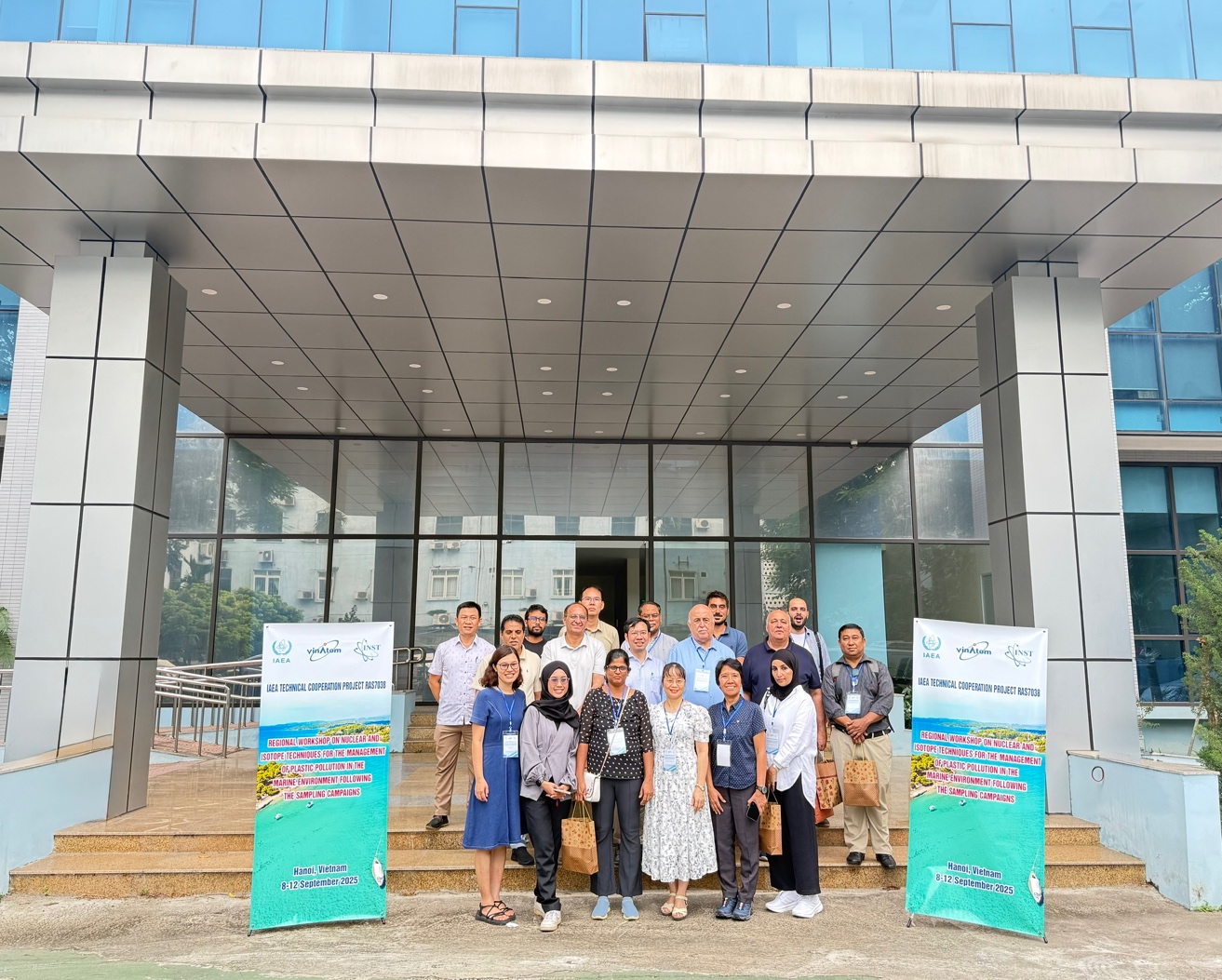 Technical visit to the INST
At the conclusion of the workshop, all participants came up with recommendations for the improvement in the implementation of the project RAS7038. The following points were highlighted: conducting inter-laboratory comparison for microplastics analysis and reporting blank values to strengthen data quality assurance and control (QA/QC); varying training activities through the combination of in-person and online formats, and encouraging the use of OpenSpecy – an open-source spectral library for polymer identification; prioritizing targeted equipment support for least developed countries; and following the United Nations Environment Programme (UNEP) guidelines under the Sustainable Development Goal (SDG) Indicator 14.1.1b with regard to the frequency of sampling for microplastics monitoring.
For Vietnam, based on the establishment of the IAEA level III microplastics laboratory which is aiming to be a level III+, the updates and activities of the country were shared, including sampling campaigns, density separation, Fourier Transform Infrared (FTIR) analysis, and isotope technique application. Hosting this workshop underscores Vietnam’s strong commitment to regional collaboration, knowledge sharing, and its growing leadership in marine microplastics monitoring.
The important outcomes of this successful workshop serve as the foundation for finalizing the regional report on microplastics in beach sand and surface waters, as well as for setting technical priorities and cooperation plans for the period 2026-2029, with the aim of establishing a Global Marine Monitoring Network by 2026.
Institute for Nuclear Science and Technology